Suet for Backyard Bird
Adding suet feeders to bird feeding stations is a great idea for bird watchers who want to attract a wider variety of species to a garden. Suet is a high energy, high protein food source that appeals to those species who eat mainly insects and may not visit seed feeders often. It is a favorite of woodpeckers of course! Also suet is loved by wrens, nuthatches, chickadees and titmice. There are many styles of
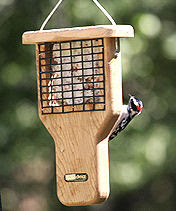
suet backyard bird feeders available. My favorite is a basic tail prop feeder like this one:
This style is simple to fill by just lifting the top and dropping a cake inside the cage. It is also easy to clean with no hard to reach spots. Often the wire grid can slide out, allowing you to get to the inside of the feeder with no trouble. The tail prop is handy for larger woodpeckers if you are lucky enough to have these beauties in your garden! It makes landing on the feeder effortless for the birds. Smaller birds like titmice and wrens cling right to the cage.
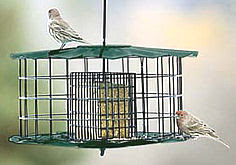
If squirrels, starlings, jays, grackles, crows and bully birds are a problem at feeders there are caged styles that keep out larger birds. The wire grid is too small for them to get through but can be passed through by the smaller songbirds.
The distance from the outside of the cage and the suet itself is too far for a squirrel to reach. A squirrel will climb all over the feeder and keep trying to gain access to the food but when they can't get any, they will eventually get bored and leave it alone. The down side of this style bird feeders is that it also keeps out the larger woodpeckers, which to me is one of the main reasons for having suet at a feeding station.
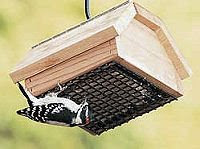
Another option to keep away bully birds, grackles, jays and starlings is an upside down suet feeder. Starlings, grackles and jays have a very hard time landing in this position but for the smaller nuthatches, chickadees and wrens it is no problem! Also the larger woodpeckers have no trouble landing on it at all.
The down side of an upside down suet feeder is that some starling will eventually figure it out. While it tends to slow down the majority we have not found them to be 100% effective.
Any of the cage style bird feeders can be used not only with suet but
compressed seed blocks bird food. Compressed seed blocks are a handy feeding method and only require you to open the package and drop the block into the feeder. They are available a a wide assortment of seed, nut, fruit and berry flavors.
There are also suet balls and plug feeders designed for ball shaped or plug shaped suet instead of the traditional suet cake. This is an easy feeder for songbirds and woodpeckers but is more difficult for larger bully birds to land on.
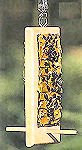
Another great item is a peanut butter or spread bird feeder. They are just what they sound like - bird feeders that you can smear peanut butter or pre-made wild bird food spreads on. Peanut butter is a favorite of several birds, in particular those amusing wrens and nuthatches. The titmice seem to think that they own anything that involves peanuts, to they will be constant visitors also. If you use peanut butter, experiment and try mixing different foods into it to see what your backyard birds prefer. Try raisins, black oil sunflower seed, bits of dried fruits and berries or other nuts. It's a fun activity for bird watchers and a great thing to try out with kids.

Finally there is a new style out there which I just am crazy about. You can now buy smaller window mount suet bird feeder cages. They attach directly to the glass of any window you want and are really easy to fill. Just lift the top of the cage and drop a suet cake or seed block in them and you have added another bird feeding stations. You have the advantage of being able to see the birds right up close and they do use them, particularly the smaller songbirds. Wrens and titmice for example are very adapted to urban settings and often quickly adjust to coming right up close to a house to eat.
As far as what type of suet to use in these feeders, you can make your own blend of peanut butter, crisco and cornmeal, or purchase already made suet cakes no-melt dough bird food, balls and plugs. Homemade bird food is always fun to try out. Your birds may prefer yours to store bought, so give it a try! The cakes and no melt to is an easy answer for instant wild bird feeding. The choice is yours!
 If you don't have the option of pole mounting a bird feeder and using physical baffles to keep them from climbing, there are plenty of specialty designs out there to stop them. My favorite is the weight activated bird feeder. These come with spring loaded perches which will cause a shield to drop down over seed ports when the heavier wight of a squirrel lands on them. Usually the squirrels figure out pretty quickly that there is no food to be had here so they stop climbing on the feeders themselves. When smaller songbirds land on the perches, the shield stays up allowing the birds to eat in peace. The weight can usually be adjusted to keep out larger birds such as grackles or starlings if you wish.
 For backyard bird watchers who really get into the hobby of creating a habitat for wild birds, the selection of bird feeder types is endless. Usually we have a few practical feeders that are easy to fill, easy to clean and offer the right types of seed and food preferred by the species we wish to attract. However, there are those of us who also want attractive bird feeders. Some decorative bird feeders are small accents placed about the garden, tucked under shrubs or in flower beds, while some are grand post mounted gazebos that are more ornate than our own homes. Either way, you can add a decorative bird feeder that suits personal taste, is pretty and still safe for birds to feed from. Let's face it, the birds themselves don't really care what a feeder looks like, they care about the food offered inside.
 You can get hopper style decorative bird feeders that feature a seed reservoir that requires less re-fills and is a stunning outdoor accent. These tend to make fantastic centerpieces in a garden landscaping design and should be placed where they can be easily viewed. They can be simple rustic country designs to grand southern mansions. Models with copper roof are quite popular, and the copper eventually turns a lovely green patina as it weathers and ages. They are often painted and feature ornate scroll work designs on the roof line or side columns, and are perfect for a formal, traditional, or romantic garden setting.
 Open platforms feeders as well come in many decorative styles. These require a bit more maintenance as they have no seed reservoir and need to be filled more often, but the plus is that this style of bird feeder is highly attractive to wild birds. Open platforms are natural for wild birds to use to eat from since they can make a quick trip to the feeder and still have a good view of the area around them and any potential approach from predators. They are as well very visible to birds flying overhead so have the potential to attract a greater variety of bird species to a backyard habitat. As far as decorative goes, there are many! From charming country barns to prim style buildings with distressed finished roofs. Whatever your taste, you can find a decorative bird feeder to suit, feed the birds and add attractive, decorative touches to your private retreat. Shop for decorative bird feeders at